05 Oct 2026
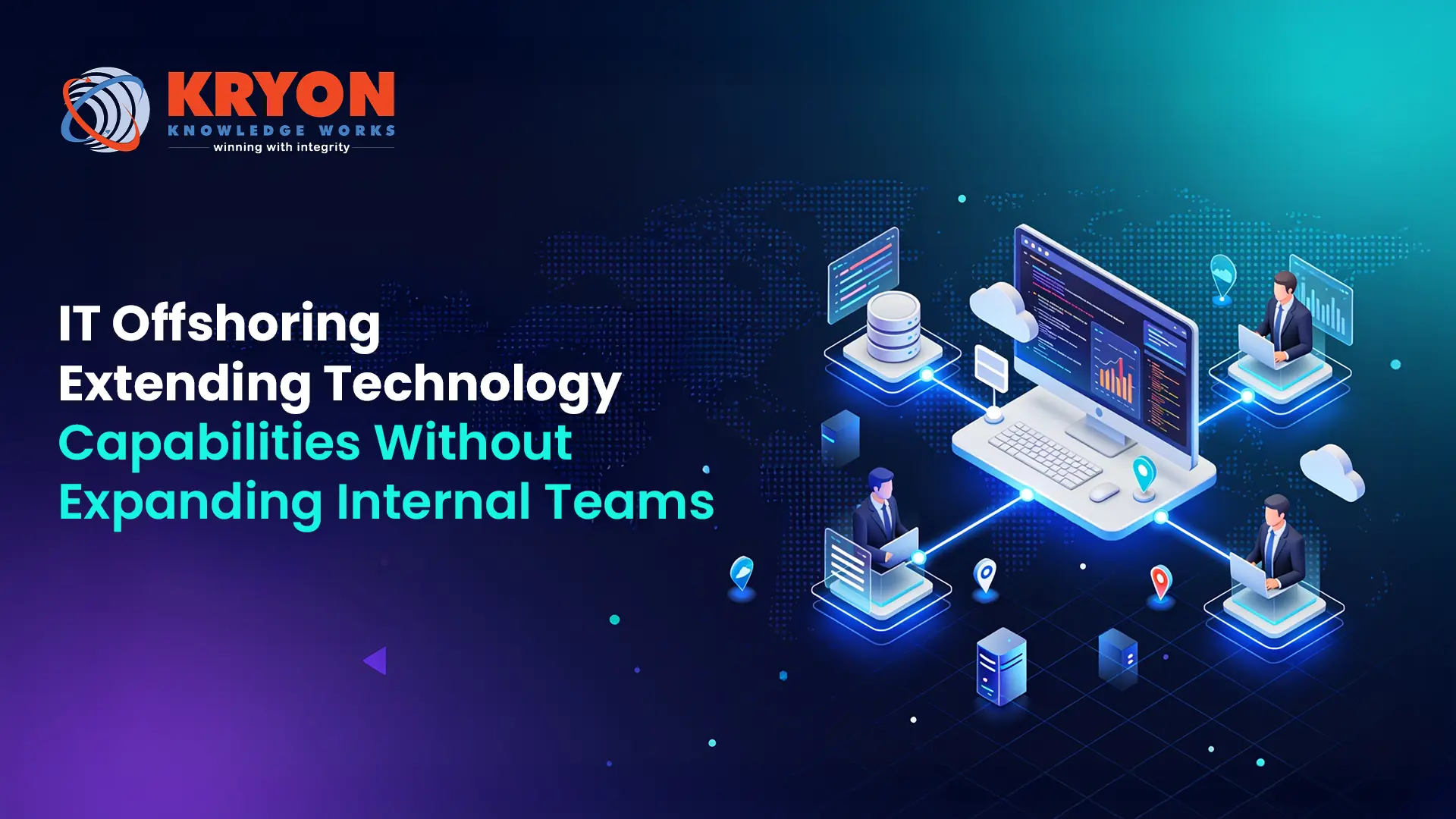
Technology requirements are growing faster than many organisations can expand their internal teams.
New projects need to be delivered. Existing applications need continuous attention. Specialized skills may be required for specific initiatives. Business priorities can change quickly, while recruitment, onboarding, and building permanent technical teams take time.
For organisations managing multiple technology priorities at once, the challenge is no longer simply finding more people. It is finding a delivery model that provides the right technical capacity, at the right time, without creating unnecessary operational complexity.
This is where IT offshoring can provide strategic value.
Rather than building every technology capability internally, organisations can extend their existing teams through an offshore delivery model that provides access to technical resources aligned with their business, project, and operational requirements.
Technology demand is rarely consistent.
A business may require significant technical capacity during a major product launch, modernization programme, platform migration, or digital transformation initiative. Once that phase is complete, the type and volume of resources required may change.
Maintaining a large permanent internal team for every possible requirement can therefore be difficult.
Recruitment can also become a constraint when projects require specialized expertise within short timelines. Finding experienced professionals, completing hiring processes, onboarding them, and building a functioning team can take considerable time.
IT offshoring provides organisations with another way to approach this challenge.
Instead of depending entirely on internal hiring, businesses can establish an offshore technology team that works alongside existing teams and expands or adapts according to project requirements.
The result is not simply additional headcount. It is access to flexible technology capacity.
A successful offshore model should not operate as an isolated external team receiving tasks with limited business context.
The offshore team can function as an extension of the organisation's existing technology capability.
Internal teams can continue to maintain control over business priorities, product direction, architecture, governance, and strategic decisions, while the offshore team supports technology execution according to agreed responsibilities.
This model can be particularly useful when an organisation has a strong internal technology function but needs additional capacity to manage growing workloads.
Rather than continuously increasing permanent headcount, the organisation can extend its delivery capability according to changing requirements.
One of the most practical benefits of IT offshoring is scalability.
Technology workloads can increase quickly.
A new client requirement, product initiative, modernization programme, platform expansion, or unexpected project can create immediate demand for additional resources.
Internal recruitment may not always move at the same speed.
An offshore model can provide a structured way to expand delivery capacity without making every increase in workload dependent on permanent hiring.
The team structure can be aligned with the nature, scale, and duration of the requirement.
This gives organisations greater flexibility to respond to changing technology priorities.
Modern IT environments involve increasingly diverse technologies.
An organisation may have strong internal expertise in its core platforms while occasionally requiring additional capabilities for specific projects or technology initiatives.
Building permanent internal teams for every specialized technology may not always be necessary.
An offshore model can provide access to professionals with relevant technical expertise based on project requirements.
This can help organisations address capability gaps without making every specialized requirement a long-term hiring commitment.
It can also support internal teams when projects require a combination of skills that may not currently be available within the organisation.
Recruitment is an important part of building technology teams, but it should not become the only mechanism available for increasing delivery capacity.
Hiring requires sourcing, interviewing, negotiations, notice periods, onboarding, training, and integration into existing teams.
When technology demand increases suddenly, these timelines can affect project planning.
IT offshoring can provide an additional delivery option.
Instead of waiting for every position to be filled internally, organisations can use offshore capacity to support defined technology requirements while maintaining their core internal teams.
This can be especially valuable for organisations experiencing rapid growth or managing multiple projects simultaneously.
Internal technology professionals often balance strategic and operational responsibilities.
Senior engineers and technology leaders may need to manage architecture, innovation, product direction, stakeholder requirements, governance, and long-term technology planning while also addressing day-to-day delivery demands.
As operational workloads increase, strategic initiatives can receive less attention.
A structured offshore model can help redistribute execution capacity.
By extending the available technology team, organisations can allow internal specialists to focus more attention on areas where their business knowledge and strategic context create the greatest value.
Offshoring therefore does not have to mean replacing internal capability.
It can mean giving internal capability more room to focus.
Growth often creates technology pressure.
More customers can mean more platform requirements. New markets can introduce additional integrations or functionality. New products can increase development demand. Business expansion may require technology teams to support several initiatives at the same time.
Hiring a permanent employee for every increase in demand can make the organisation less flexible when priorities later change.
IT offshoring can provide a more adaptable model.
Organisations can expand technology capacity according to current business requirements while retaining the ability to adjust the engagement as those requirements evolve.
This makes offshoring particularly relevant for businesses that need technology capacity to grow alongside demand.
Consider an organisation planning a major digital initiative while continuing to manage its existing technology environment.
Its internal technology team already has full workloads and remains responsible for important business systems. Recruiting an entirely new team could take months, but shifting existing employees away from current responsibilities could affect other priorities.
Instead, the organisation establishes an offshore technology team to provide additional delivery capacity.
The internal team retains ownership of technology strategy, business priorities, architecture, and governance. The offshore team works within those established processes and supports the additional technology workload.
As project requirements change, the offshore team can be adjusted according to the skills and capacity required.
The organisation gains additional execution capability without needing to build an entirely new permanent internal team for the initiative.
Once the initial project is complete, the offshore engagement can evolve according to the organisation's next set of technology priorities.
This is where IT offshoring becomes more than resource outsourcing.
It becomes a flexible extension of technology capability.
The value of offshoring does not come simply from moving work to another location.
An effective model requires clear communication, defined responsibilities, appropriate governance, knowledge sharing, security practices, measurable delivery expectations, and alignment between offshore and internal teams.
Organisations should also consider cultural alignment, communication overlap, resource continuity, technical capability, documentation, and the ability of the offshore team to adapt as requirements change.
The objective should be to create a delivery relationship in which location becomes less important than capability, collaboration, accountability, and outcomes.
The conversation around IT offshoring is changing.
It is no longer only about reducing the cost of technology delivery.
For many organisations, its greater value can come from scalability, access to specialized expertise, flexible capacity, reduced dependence on continuous hiring, and greater focus for internal technology teams.
When structured effectively, an offshore team can become an extension of the organisation's technology function—providing additional capability when and where it is required.
At Kryon Knowledge Works, we can support organisations looking to extend their technology capacity through flexible IT offshoring models aligned with their existing teams, technology environment, and business requirements.
Whether the requirement involves expanding an existing technology team, accessing specialized expertise, or creating additional delivery capacity for growing project demands, the model can be structured around the organisation's specific requirements.
Looking to scale your technology capabilities without continuously expanding your internal team?
Connect with Kryon Knowledge Works to explore an IT offshoring model aligned with your business and technology requirements.
2026 © Kryon Knowledge Works. All Rights Reserved